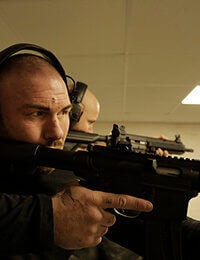
How Are International Football Teams Protected During Major Tournaments?
- Posted by Phoenix

Behind every international football team is a coordinated protective operation connecting airports, hotels, training facilities, secure transport, stadiums and the wider host environment.
When an international football team arrives at a major tournament, public attention naturally focuses on the players, fixtures and performances on the pitch. Behind the scenes, however, a substantial security and logistics operation may already have been under development for months.
Protecting a national team involves considerably more than placing security personnel outside a hotel or escorting players into a stadium. Teams may move repeatedly between airports, accommodation, training grounds, stadiums, media locations and official events while attracting substantial public and media attention.
Effective team security is therefore best understood not as one individual measure, but as a coordinated protective system designed to support safe movement, appropriate access control, privacy and the uninterrupted operation of the team.
Effective tournament security normally begins well before players, coaches and support staff enter the host country.
The circumstances surrounding every international team may be different. Protective planning may consider the host location, public profile of the team, expected supporter activity, political circumstances, media attention and any known concerns affecting individual players or staff.
Preparatory work may include:
The purpose is not to assume that every location or movement presents a serious threat. It is to identify foreseeable concerns, consider their likelihood and potential impact, and establish proportionate measures in advance.
Major-event protection may involve cooperation between tournament organisers, football associations, police, public authorities, venue security teams, transport providers, hotel management and specialist security personnel.
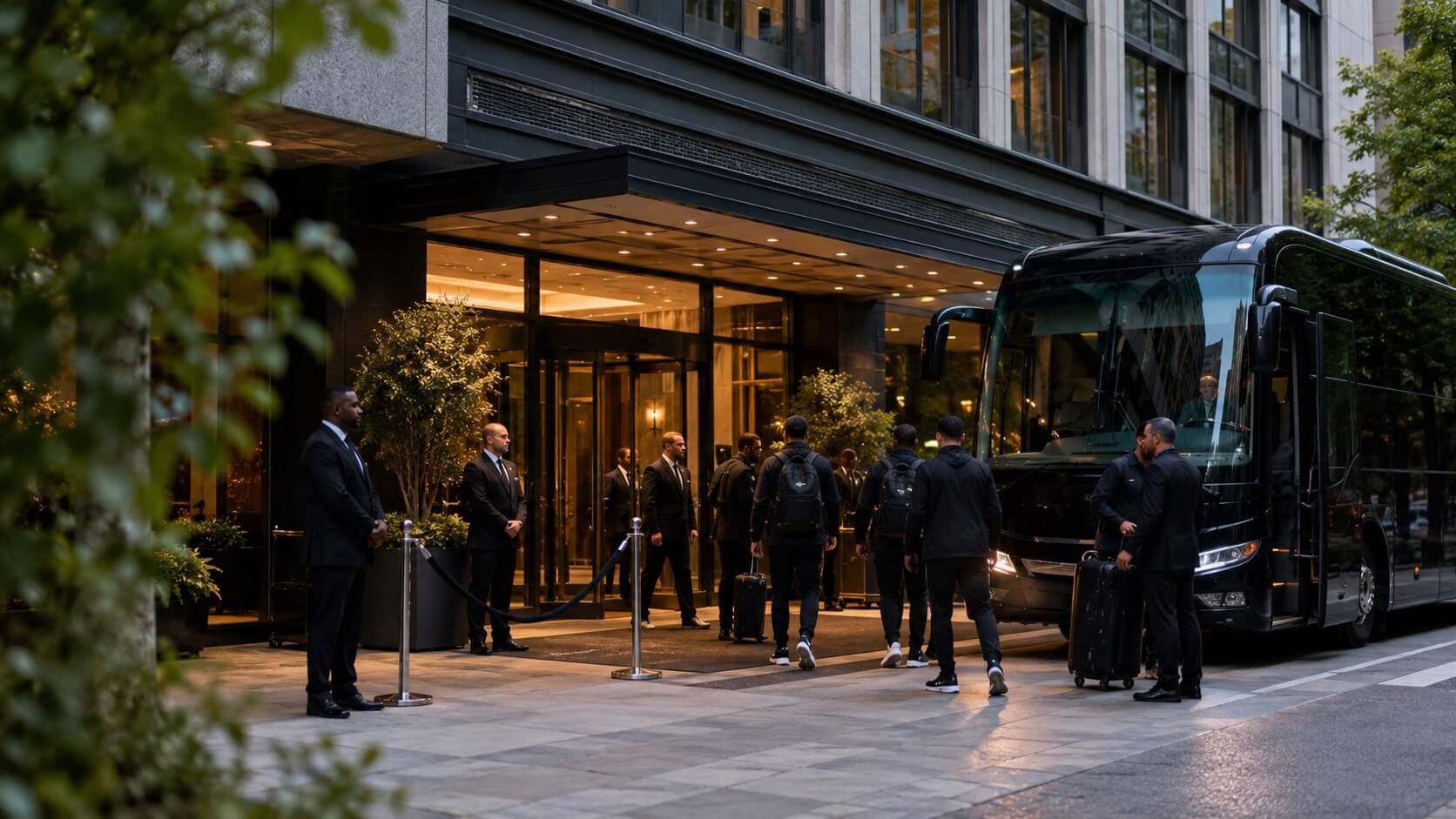
During a tournament, the team hotel becomes far more than accommodation. It may operate as a temporary base for players, coaches, medical personnel, analysts and support staff.
The hotel must continue functioning effectively while providing an appropriate level of privacy, controlled access and operational resilience.
Relevant considerations may include designated team areas, entrances and exits, authorised visitors, deliveries, supporter activity and communication between hotel management and team representatives.
The objective is not necessarily to create a visibly restrictive environment. Security should support the team’s routine while allowing players to rest, recover and prepare with minimal unnecessary interference.
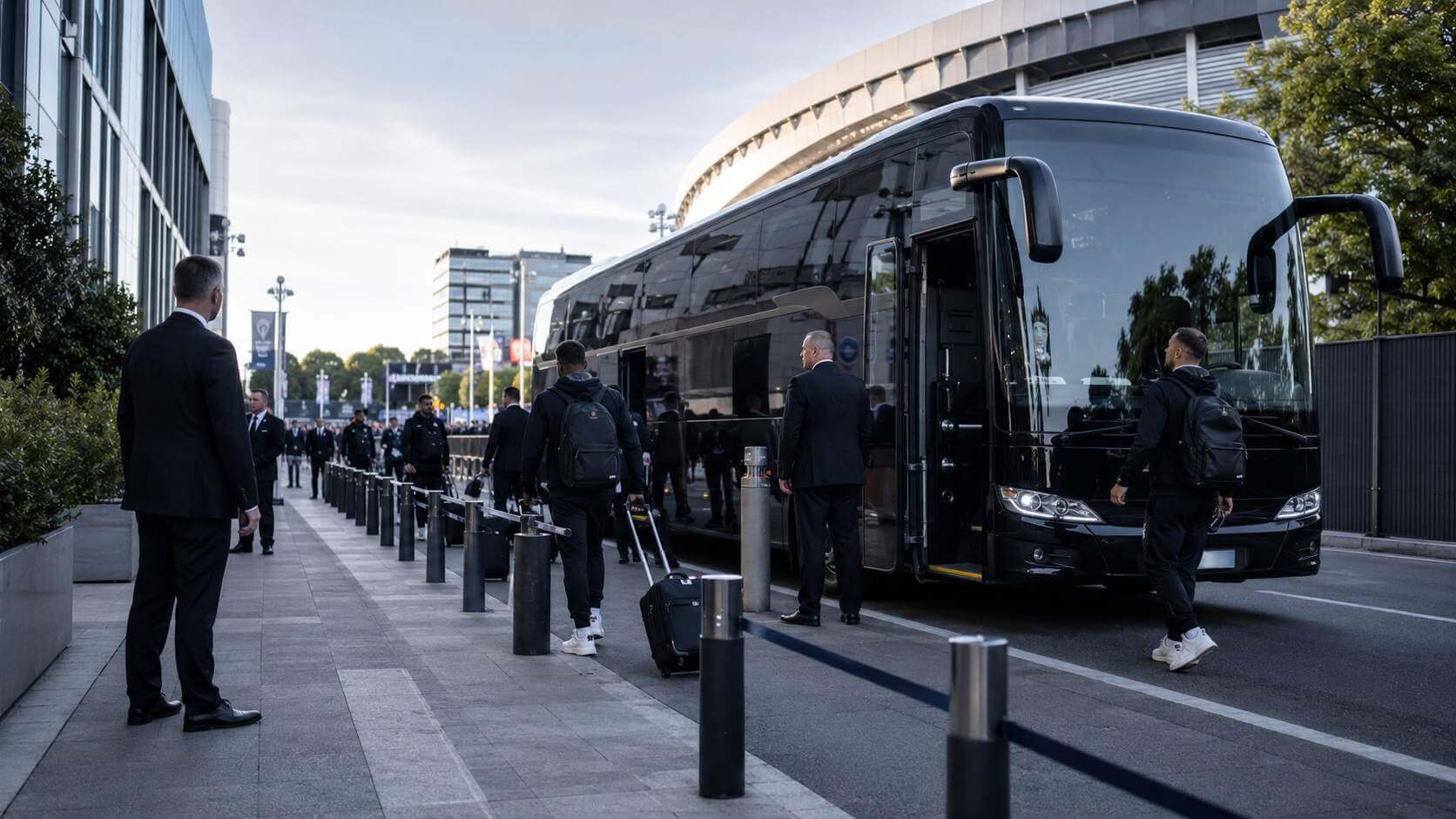
Transport is one of the most visible elements of tournament security.
A team may travel between its hotel, training facility, stadium and other official locations several times within a relatively short period. Each movement may involve players, coaches, medical personnel, equipment staff and operational support teams.
Team coaches may be supported by traffic-management measures, police resources or other escort arrangements depending on the event, location and assessed requirement.
Prior to movement, planning may consider:
The objective is not simply to move the team quickly. The movement should be controlled, coordinated and reliable while supporting the wider sporting schedule.
Timing is particularly important. Delays may affect training, media commitments, match preparation and tournament obligations. Protective planning must therefore operate alongside logistics rather than as an isolated function.
Training locations may attract less public attention than stadiums, but they remain important operational sites.
Players may attend these facilities daily and remain there for extended periods. Appropriate arrangements may consider site boundaries, vehicle access, accreditation, privacy, spectator areas, nearby public spaces and emergency access.
Accommodation, training and transport should be viewed as connected elements of the same operation rather than separate security environments.
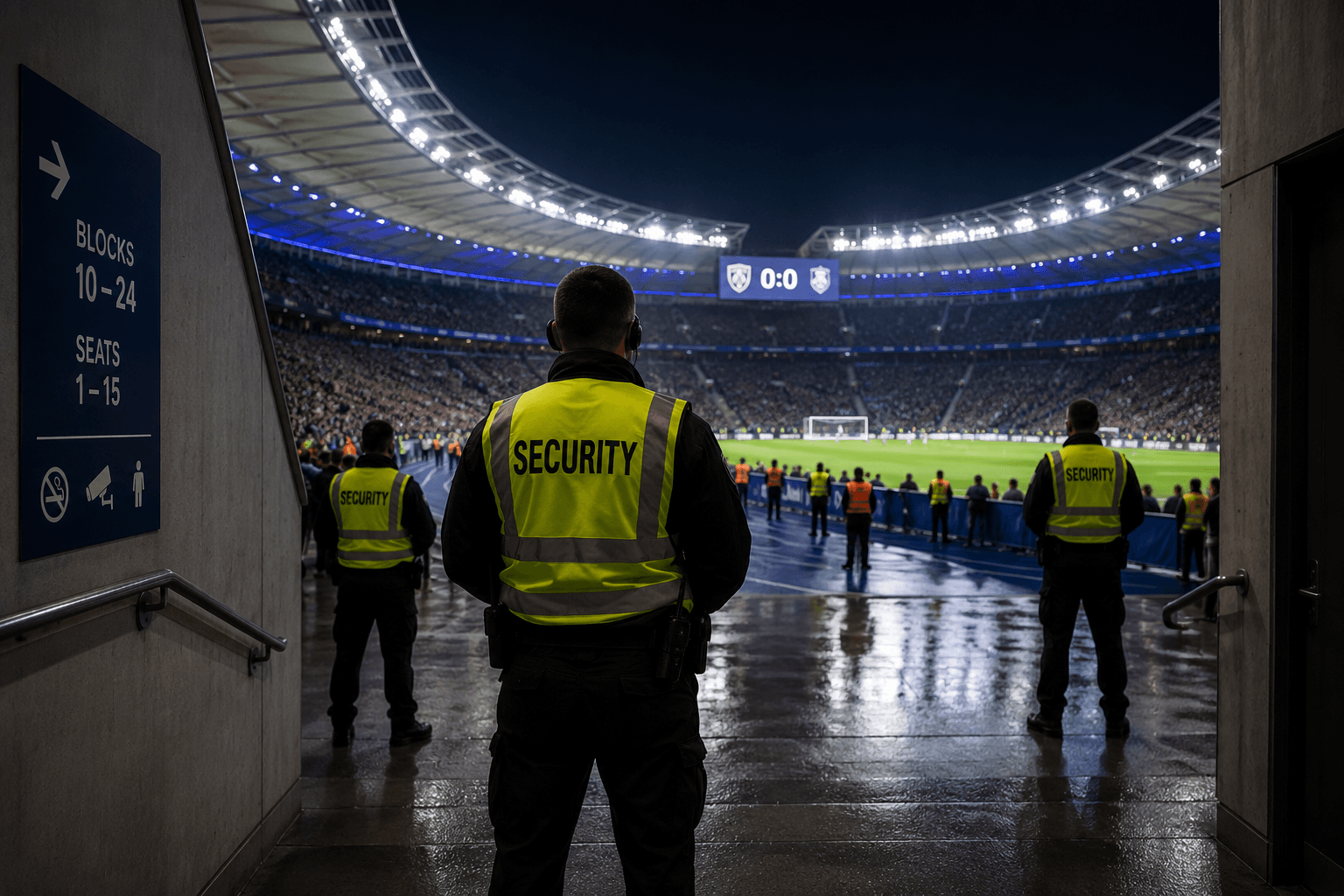
Major stadiums operate extensive safety and security systems intended to protect large numbers of people.
Venue security is primarily concerned with the safe operation of the stadium and the protection of everyone within it. Team-specific arrangements focus more closely on the movements, privacy, access requirements and operational needs of the participating team.
Both functions must work together throughout team arrival, internal movement and departure.
International football teams can attract substantial crowds wherever they travel.
Supporters may wait outside hotels, gather near training venues or follow the movement of team vehicles. In most circumstances, this attention is positive and contributes to the atmosphere surrounding a major competition.
Even a well-intentioned crowd may create operational challenges. A rapid increase in numbers can restrict entrances, obstruct vehicles or create pressure around barriers.
Security personnel may need to balance public engagement with the requirement to maintain safe access, protect the team’s schedule and reduce unnecessary disruption.
Individual players may also require additional consideration because of their public profile or personal circumstances.
Effective protection may depend on planning, information management, controlled access and discreet professional support rather than a larger or more visible security presence.
Protective decisions depend on accurate and timely information.
Relevant intelligence may concern public-order issues, planned demonstrations, online threats, changes in supporter activity, transport disruption, local incidents or circumstances affecting an individual player.
Major-event security is dynamic. A plan which was appropriate previously may require review when new information becomes available.
Medical planning may need to consider both sporting injuries and wider emergencies.
Relevant arrangements may include access to medical personnel, local emergency procedures, appropriate facilities, emergency vehicle access, communications and evacuation planning.
Security and medical planning should support one another so that an effective response is not delayed by unclear responsibilities or obstructed access.
No single organisation protects an international football team in isolation.
The wider operation may involve tournament organisers, national football associations, police, government agencies, stadium security departments, hotel security teams, transport providers, medical services, intelligence personnel and specialist security professionals.
Its effectiveness depends on communication, cooperation and clearly understood responsibilities.
International tournaments involve multiple locations, large crowds, fixed sporting schedules, international travel and intense public attention. Security must therefore be coordinated across the complete journey.
The stadium may be one of the most controlled locations a team enters. The wider challenge is maintaining appropriate protection throughout every stage before and after the match.
Common questions concerning the protective arrangements surrounding international teams during major tournaments.
Do international football teams have their own security personnel?
Why do football teams sometimes receive police escorts?
Is stadium security responsible for protecting the team everywhere?
Do famous footballers receive additional protection?
Why is information security important during a tournament?
- FIFA Stadium Guidelines:
stadium planning and operations
- FIFA Safety and Security Operations:
stadium safety and security
- INTERPOL Project Stadia:
international major-event security
Phoenix provides bespoke close protection, executive protection and secure transportation support for high-profile individuals, corporate clients and international requirements.
This article provides a general overview of protective considerations associated with major international football tournaments. Specific arrangements vary between events, host countries and participating teams. Detailed operational procedures are appropriately restricted and are not discussed within this article.